Cost Comparison: Installed Price in Palm Beach County (2026)
The price gap between stamped concrete and pavers in South Florida is significant and often the deciding factor. Here are the current installed price ranges for Palm Beach County:
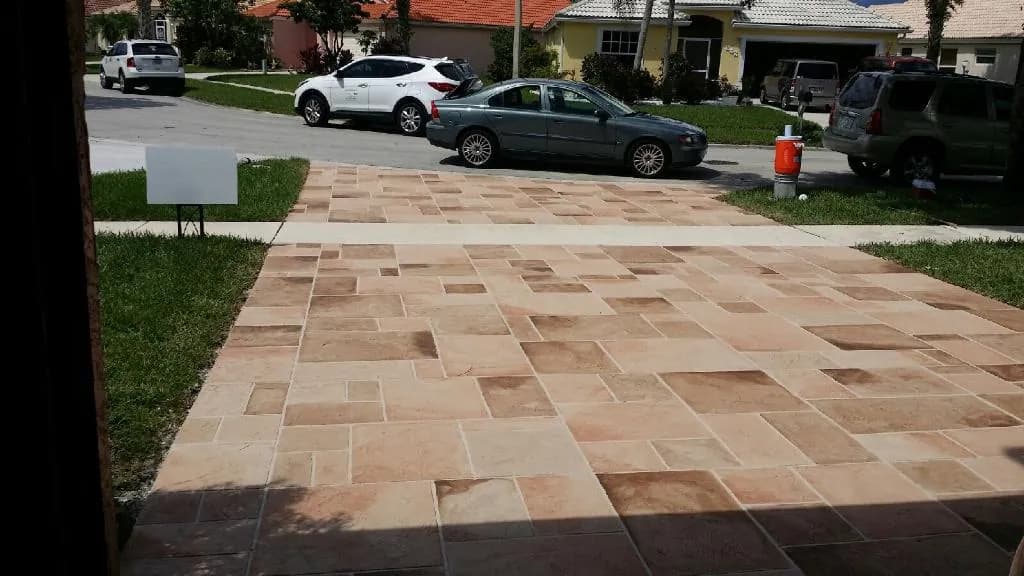
- Stamped concrete (single pattern, single color): $12–$15 per sq ft installed
- Stamped concrete (multi-color, complex pattern or border): $15–$18 per sq ft installed
- Concrete pavers (standard): $15–$22 per sq ft installed
- Tumbled or specialty concrete pavers: $18–$28 per sq ft installed
- Natural travertine pavers: $20–$35 per sq ft installed
- Natural marble or exotic stone pavers: $30–$50+ per sq ft installed
- For a 600 sq ft driveway: stamped concrete runs $7,200–$10,800 vs. $9,000–$16,800 for concrete pavers
- For a 400 sq ft patio: stamped concrete runs $4,800–$7,200 vs. $6,000–$11,200 for pavers
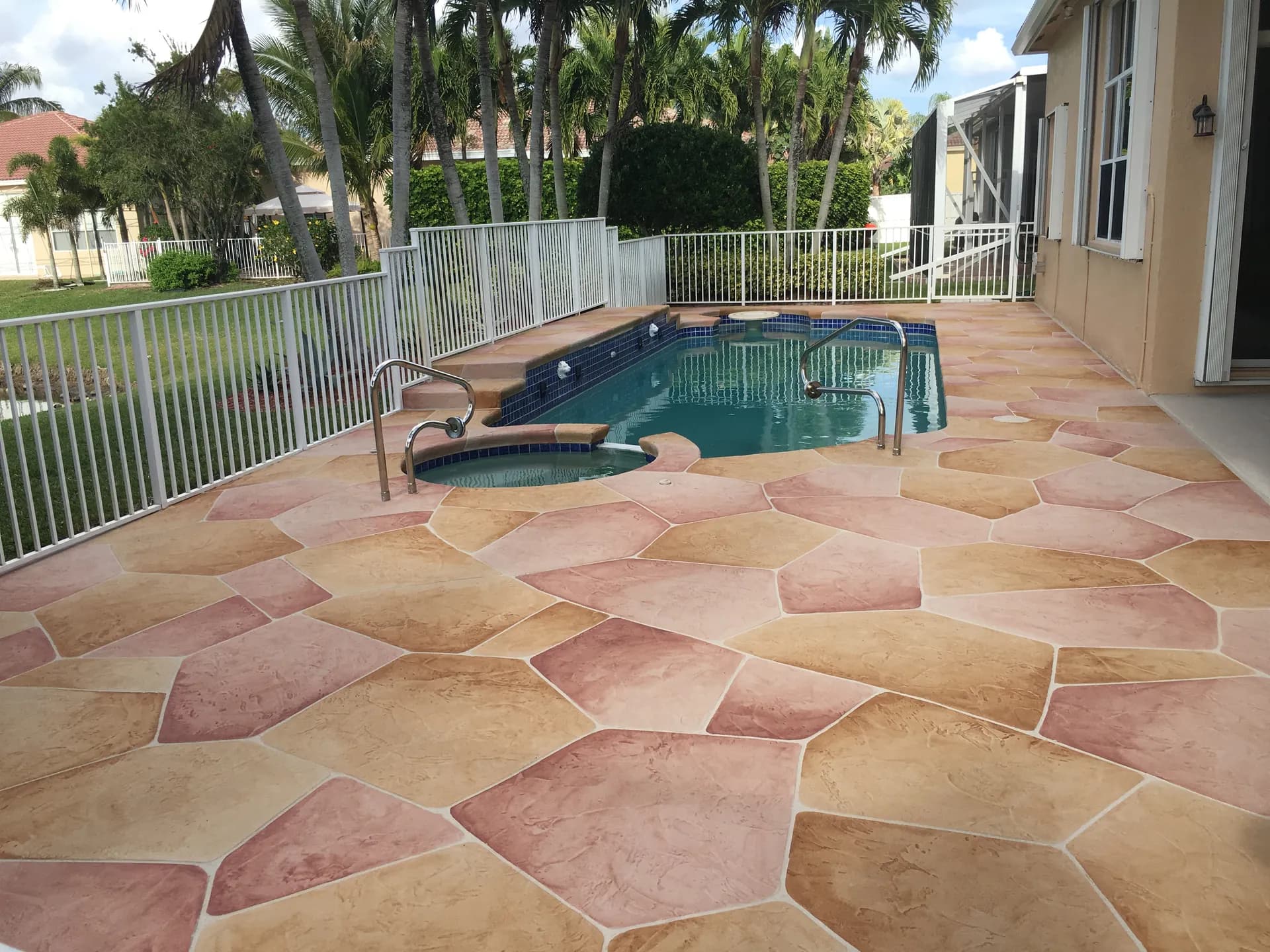
- For a 600 sq ft pool deck: stamped concrete runs $7,200–$10,800 vs. $9,000–$16,800 for pavers
Durability in South Florida's Climate
South Florida's environment creates specific durability challenges that affect how both materials perform over time. Understanding these differences helps you choose what will actually last on your property.
- Sandy soil and settlement — Palm Beach County's sandy soil is subject to erosion during heavy rain and movement from tree root activity. Pavers can shift and settle unevenly when the sand base erodes, creating a wavy surface and trip hazards. Stamped concrete is a monolithic slab — it doesn't shift the same way, though it can crack if the base settles unevenly.
- Heavy seasonal rain — Florida's rainy season (June–October) delivers 6+ inches of rain per month. Water infiltrates paver joints and can erode the sand base over time. Stamped concrete is sealed, so water sheets off the surface rather than penetrating.
- UV exposure — Florida's UV index is extreme compared to most of the US. Both stamped concrete and pavers fade in direct sun. Stamped concrete requires resealing every 2–3 years to maintain color vibrancy. Pavers may require re-sanding and occasionally color treatment.
- Salt air — Coastal Palm Beach County communities (Delray Beach, Boca Raton, Palm Beach) experience salt air that degrades some sealers and paver finishes faster. Use a penetrating silane/siloxane sealer on concrete in coastal zones.
- Hurricane wind and debris — Both options are comparable in resistance to wind. However, loose pavers can become projectiles in extreme wind events; a monolithic concrete slab does not have this issue.
Maintenance: 10-Year Cost Comparison
Upfront cost is only part of the story. Here is what each option realistically costs to maintain over 10 years for a typical South Florida driveway:
- Stamped concrete maintenance: Reseal every 2–3 years ($1.50–$3/sq ft); pressure wash annually; minor crack repair as needed. 10-year maintenance cost on a 600 sq ft driveway: $2,700–$5,400.
- Paver maintenance: Re-sand joints every 3–5 years ($0.50–$1/sq ft); reset settled sections as needed ($200–$800 per incident); pressure wash and reseal annually or biannually. 10-year maintenance cost on a 600 sq ft driveway: $3,000–$6,500.
- Stamped concrete repair: If cracking occurs, repair options include epoxy crack injection ($5–$15/linear foot) or overlay. Full replacement is rare before 25 years.
- Paver repair: Individual pavers can be replaced without disturbing the entire surface — a genuine advantage if a specific section fails. Replacement pavers must match the original (older dye lots may not match exactly).
HOA Acceptance in Palm Beach County
Many Palm Beach County communities have HOA architectural guidelines that specify approved driveway and patio materials. This is an important practical consideration before you decide:
- Pavers: Widely accepted in virtually all Palm Beach County HOAs. Natural travertine and concrete pavers are explicitly approved in many community guidelines for their aesthetic.
- Stamped concrete: Accepted in most HOAs but some communities have restrictions on specific patterns or colors. Wellington equestrian communities and some Boca Raton gated communities require pre-approval for stamped concrete with non-standard colors.
- Before committing to either option, request a copy of your HOA's architectural guidelines and submit an ARC (Architectural Review Committee) application before signing a contract.
Which Is Better for Each Application
The right choice often depends on where the material will be installed:
- Driveways — Stamped concrete is generally the stronger choice for South Florida driveways. The monolithic slab handles vehicle weight without joint erosion. It's 15–35% less expensive than pavers for an equivalent surface.
- Patios and outdoor living areas — Both options work well. Pavers offer easier spot repair and a wider range of natural stone aesthetics. Stamped concrete offers a lower-maintenance surface at lower cost.
- Pool decks — Stamped concrete overlays are excellent for pool decks (no joint migration, easier to keep clean). However, textured pavers (travertine especially) have gained popularity for pool decks because of natural slip resistance and cooler surface temperature.
- Walkways — Pavers are often preferred for narrow walkways where curves and cuts are required. Stamped concrete requires forms and is less flexible for irregular layouts.
- Front entryways and curb appeal — Pavers — especially tumbled travertine or brick-style pavers — often have a higher-end aesthetic at first glance. Stamped concrete that mimics the same materials can achieve a nearly identical look at lower cost.
Resale Value: What Palm Beach County Buyers Expect
Both stamped concrete and quality pavers add value to a South Florida home. The difference in buyer perception depends more on the quality of installation and condition than the material itself. A well-maintained stamped concrete driveway in good condition will not lose a home sale to pavers — buyers care about curb appeal, not the material it's made from. If your neighborhood has predominantly paver driveways, pavers may align better with buyer expectations. If stamped concrete is common in your area, that's the better value choice.