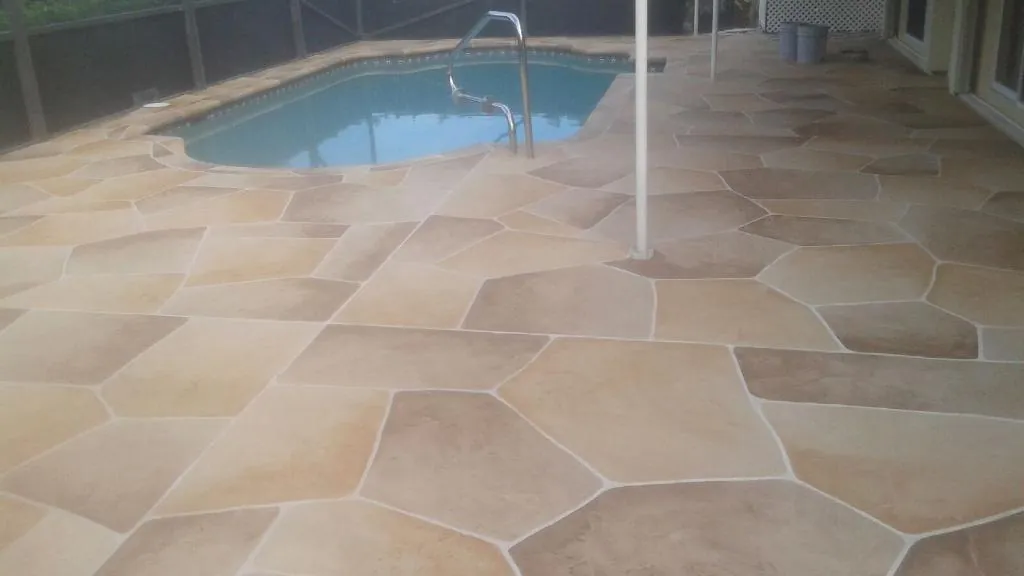
The South Florida Maintenance Calendar for Stamped Concrete
Stamped concrete requires less ongoing maintenance than pavers—no weeding, no releveling, no polymeric sand reapplication—but it does need a regular care schedule to protect color and surface integrity in South Florida's climate:
- Monthly: hose off surface debris; check for areas where water doesn't bead (signals sealer failure)
- Every 3–6 months: light cleaning with pH-neutral concrete cleaner to remove algae, mold, and dirt buildup common in South Florida's humidity
- Annually: thorough pressure wash at 1,200–1,500 PSI maximum, followed by a full sealer condition inspection
- Every 2–3 years: reseal with a UV-resistant topcoat appropriate for stamped surfaces
How to Clean Stamped Concrete Without Damaging It
Cleaning stamped concrete incorrectly strips sealer and fades integral color. Follow these guidelines for South Florida conditions:
- Use a pH-neutral concrete cleaner — never bleach, ammonia, or acidic cleaners, which degrade sealer and affect integral color
- Soft bristle brush or deck brush — never a wire brush or abrasive pad
- Pressure washer: 1,200–1,500 PSI maximum; 40-degree fan tip only — zero-degree tips etch and strip sealer
- Work in sections — clean, rinse, and move on; don't let cleaner dry on the surface
- For mold and algae in shaded areas: oxygen-based cleaner (sodium percarbonate) diluted per label — safe for sealer and color
- After cleaning: allow 48 hours minimum to dry fully in South Florida's humidity before inspecting sealer or applying new coat
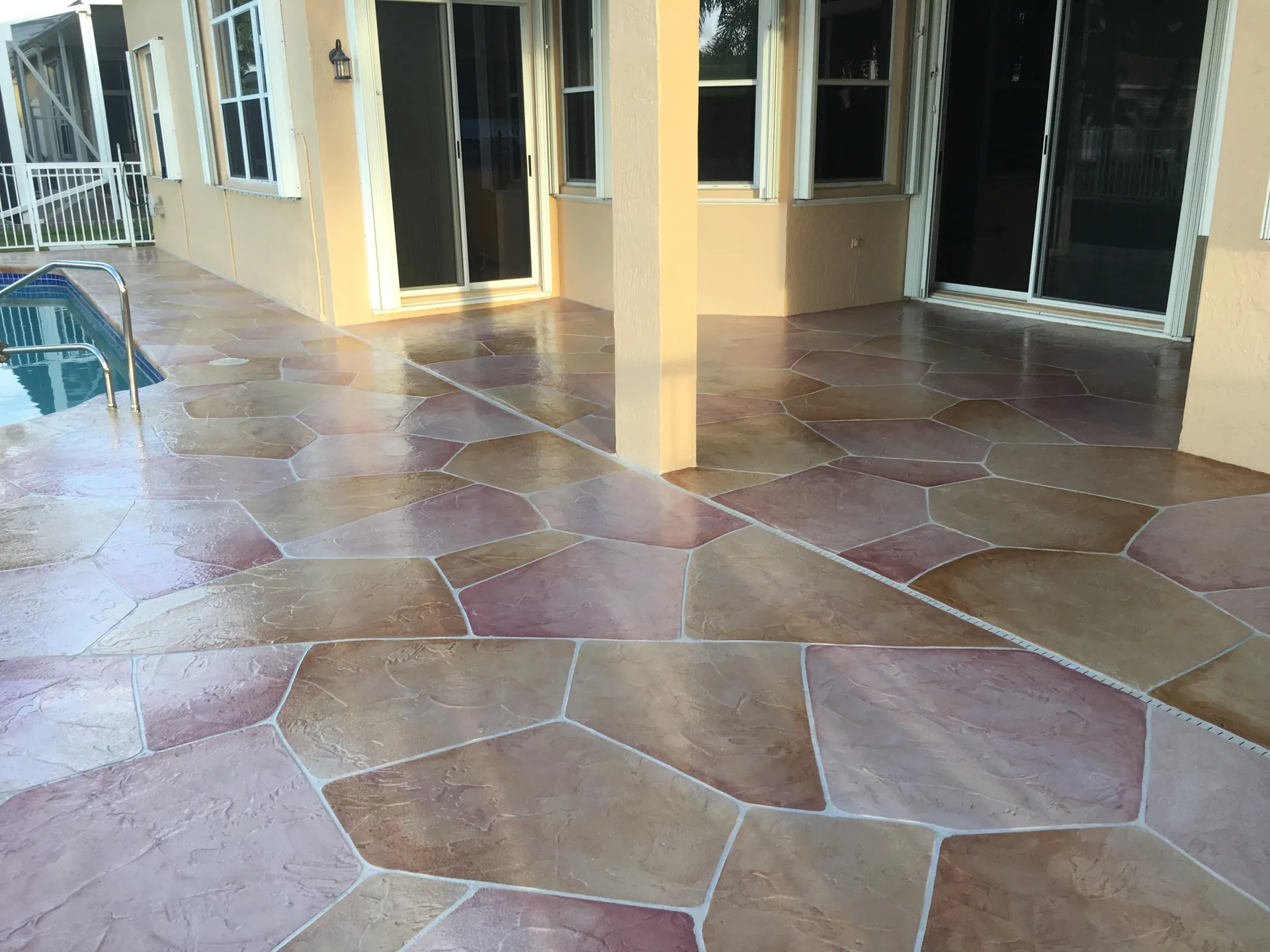
Resealing Stamped Concrete: When and How
Resealing is the single most important maintenance task for stamped concrete in South Florida. Without fresh sealer, UV rays fade integral color, rain infiltrates the surface layer, and the stamped pattern gradually erodes. How to tell when resealing is needed:
- Water test: pour water on the surface — if it soaks in rather than beading up, the sealer has failed
- Visible color fading or dullness compared to shaded areas or protected edges
- White haze or flaking (topcoat delamination) — requires stripping old sealer before reapplication
- Surface feels rough or gritty where it used to be smooth — surface layer erosion
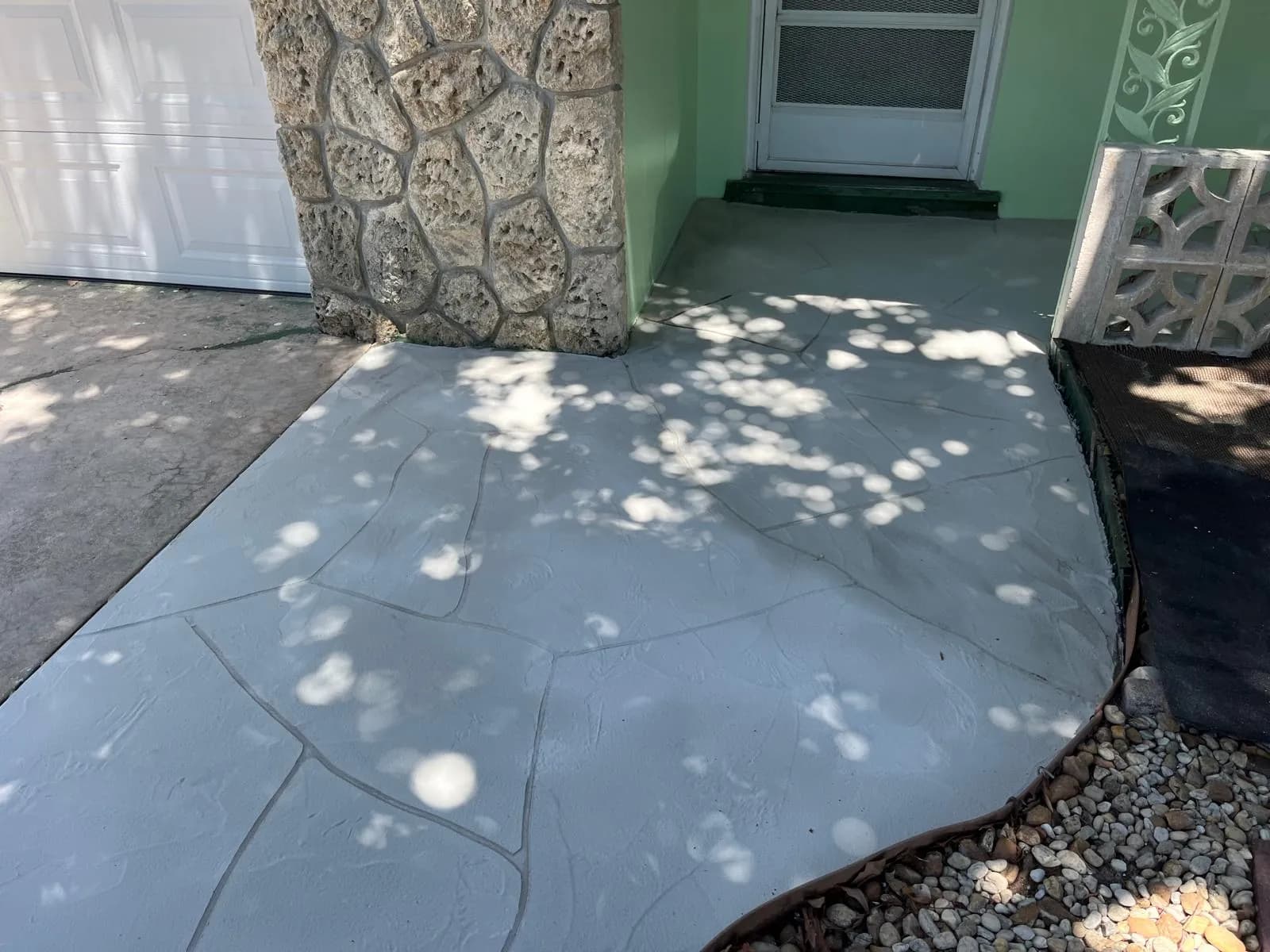
Common Stamped Concrete Problems in South Florida and How to Fix Them
South Florida's climate creates specific stamped concrete problems that appear more often here than in other regions:
- Color fade — UV bleaches integral pigment over time; mitigated by UV-resistant sealer every 2–3 years; severe fading can be partially corrected by a professional with tinted sealer or a new color coat
- White haze (efflorescence) — mineral deposits from moisture migrating through the slab; common near pool areas; treat with diluted muriatic acid wash before resealing (professional application recommended)
- Algae and mold in shaded areas — clean with oxygen-based cleaner; treat shaded areas more frequently than sun-exposed sections
- Hairline cracks at control joints — normal; fill with color-matching polyurethane sealant before resealing
- Peeling sealer — caused by applying new sealer over failed sealer without stripping, or sealing over a damp surface; requires stripping before reapplication
When to Call a Contractor for Stamped Concrete Maintenance
Some maintenance tasks go beyond reasonable DIY scope and require a professional to avoid damaging the stamped surface:
- Sealer stripping and reapplication — failed sealer (flaking, haze, peeling) must be chemically stripped before new sealer adheres; stripping aggressive enough to remove failed sealer can damage the stamp pattern if done incorrectly
- Color restoration — significant color fading sometimes requires a tinted sealer or new color coat applied by a concrete professional
- Structural crack repair — any crack with vertical displacement should be evaluated before sealing over it
- Full reseal after 10+ years — older surfaces may need professional surface prep to achieve proper adhesion for new sealer
How Long Does Stamped Concrete Last in South Florida?
With the maintenance schedule above, stamped concrete in South Florida lasts 20–25 years before a major refresh is needed. At that point, a decorative overlay can be applied over the existing stamped surface—restoring color, pattern, and protection without demolition. This makes stamped concrete a durable long-term surface that keeps delivering value with a predictable, low-cost maintenance cycle.