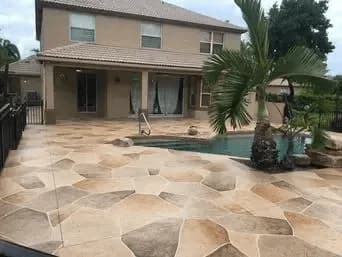
Why Hurricane Season Is the Right Time to Address a Worn Pool Deck
Hurricane season in South Florida runs June 1 through November 30. A pool deck that is cracked, spalling, or has compromised drainage creates specific risks when storms arrive: Cracks in the slab allow storm water to infiltrate the base and the pool shell surround, accelerating structural damage. A delaminated coating traps moisture underneath, creating freeze-thaw cycles during unusual cold snaps that worsen cracking. Worn, smooth surfaces become dangerously slippery when wet — the exact condition that occurs during and after storms. The window between April and late May — before the first June system — is the highest-demand period for pool deck work in Palm Beach County. Contractors are booked heavily by May. Homeowners who schedule in April get project completion with cure time to spare before June 1.
What Happens to a Damaged Pool Deck During a Storm
A pool deck in good condition handles storm water by sloping away from the pool structure and draining to the designated drainage points. When the surface is compromised, that drainage function breaks down:
- Cracked surfaces channel water into the sub-base, softening it and causing further slab settlement
- Delaminated overlays catch debris and standing water, adding dead weight load to the deck structure
- Failed sealant allows pool chemicals and storm water to react inside cracks, accelerating concrete spalling
- Compromised coping (pool edge) allows water infiltration into the pool shell bond beam — the most costly repair in pool deck work
- Post-storm debris cleanup is significantly more difficult on a textured surface that's peeling or delaminated
Best Pool Deck Finishes for Palm Beach County's Storm Season
Not all pool deck finishes are equal for South Florida conditions. The best options for 2026 balance slip resistance, heat reflection, storm durability, and maintenance requirements:
- Cool Deck / Acrylic Spray Texture — The most common choice in Palm Beach County. UV-resistant, slip-resistant when wet, and heat-reflective. Cost: $5–$8/sq ft installed. Best for: standard residential pool decks.
- Polyaspartic Coating — A harder, faster-curing alternative to epoxy. UV-stable (epoxy yellows in South Florida sun), excellent chemical resistance, and durable under heavy foot traffic. Cost: $8–$12/sq ft. Best for: high-use decks, commercial applications.
- Stampable Overlay — A decorative option applied over existing concrete in good structural condition. Travertine or stone patterns with anti-slip sealant. Cost: $9–$14/sq ft. Best for: HOA communities and high-end residential where aesthetics matter.
- Rubber/Cushion Decking — Soft surface material for barefoot comfort. Less common in PBC but used in some luxury and family-focused properties. More maintenance-intensive than concrete finishes.
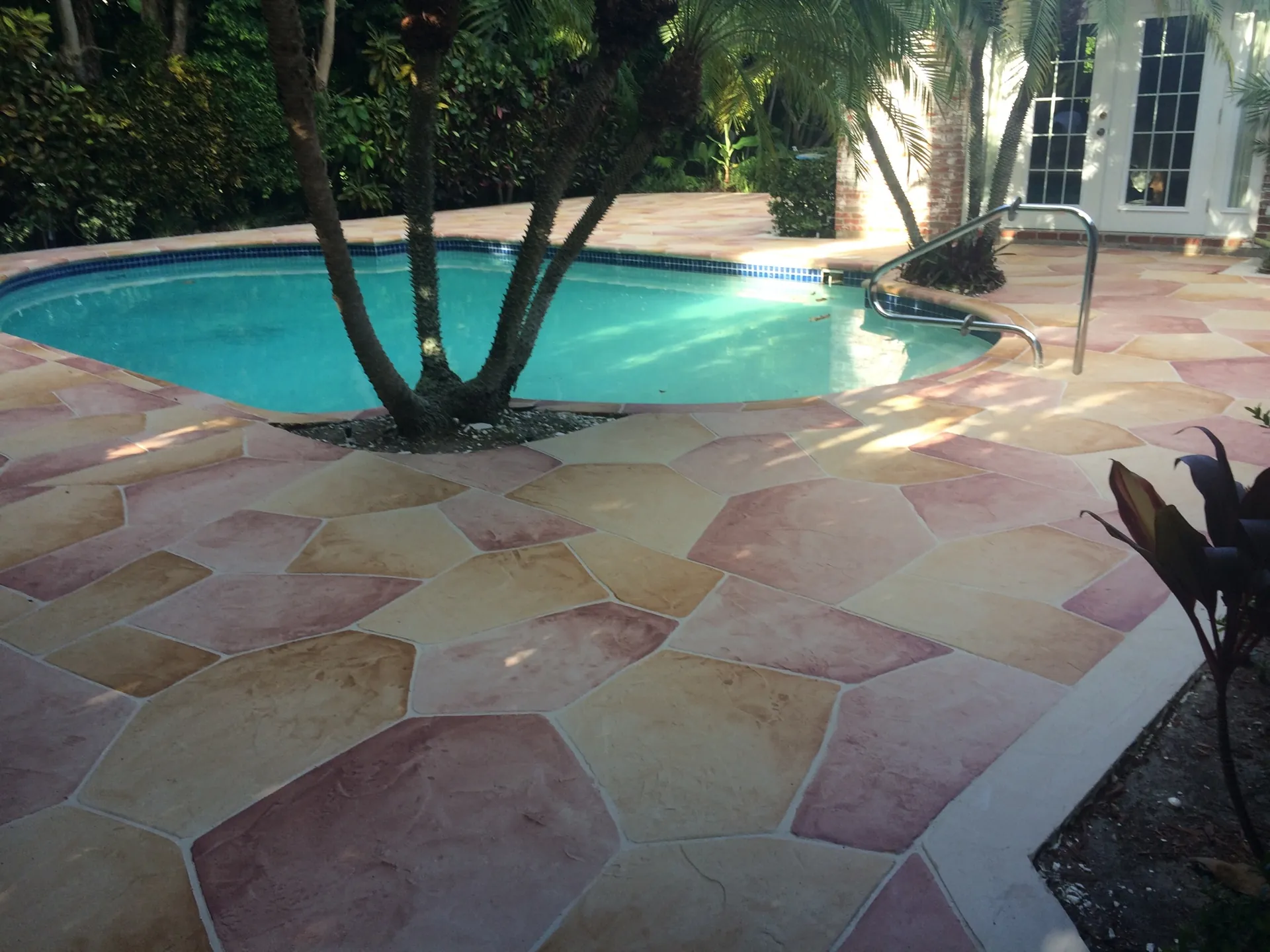
2026 Pool Deck Resurfacing Costs in Palm Beach County
Pool deck resurfacing costs in Palm Beach County range from $5 to $14 per square foot installed depending on the finish type, deck condition, and whether the coping needs repair. Here are the typical ranges homeowners see in 2026:
- Acrylic spray texture (cool deck): $5–$8/sq ft
- Polyaspartic coating: $8–$12/sq ft
- Stampable overlay (decorative finish): $9–$14/sq ft
- Coping repair (if needed): $25–$45 per linear foot
- Crack repair before resurfacing: $3–$6/sq ft of affected area
How Long Does Pool Deck Resurfacing Take?
Most residential pool deck resurfacing projects in Palm Beach County complete in one to two days for the application, plus a 24–72 hour cure period before foot traffic and 5–7 days before resuming full pool use. The timeline depends on deck size, whether crack repairs are needed first, and current weather conditions (resurfacing requires dry conditions and temperatures above 50°F, which is not a concern in South Florida April–May). Scheduling before May 15 gives you the best chance of completing the project with cure time before hurricane season opens. Contractors often have a 2–4 week backlog starting in mid-April.