Why Hurricane Season Is Hard on Concrete
South Florida's Atlantic hurricane season runs June 1 through November 30. During that window, concrete surfaces take a sustained beating: heavy rainfall drives moisture into unsealed surfaces; storm debris—branches, gravel, and roof material—impacts and stains; post-storm flooding saturates soil beneath slabs, creating voids and long-term settling risk; and the intense UV exposure between storms degrades any sealer that's already compromised.
- Sustained rainfall saturates cracked or unsealed concrete, accelerating spalling and cracking
- Debris impacts stain and chip unsealed surfaces
- Floodwater under slabs erodes sandy South Florida soil, creating voids and settling
- Post-storm pressure washing with harsh chemicals strips degraded sealer
- UV exposure between storms degrades sealers that are already thin or cracked
What Sealing Actually Protects Against
Sealing is not hurricane-proof, but it significantly reduces damage from the specific threats South Florida storms create:
- Water infiltration — penetrating sealers block moisture from entering concrete pores, the primary driver of long-term spalling
- Staining — topcoat sealers form a barrier against oil, mold, algae, and storm debris staining
- Surface erosion — sealer protects against abrasion from debris and high-pressure storm rain
- Algae and mold — South Florida's post-storm humidity creates ideal conditions for algae; sealer inhibits it
- Post-storm cleanup — sealed surfaces clean up in minutes with a hose; unsealed surfaces require pressure washing and may need resurfacing
Best Time to Seal Before Hurricane Season
The optimal window for pre-hurricane sealing is April through mid-May—dry conditions before the June 1 season start, low enough humidity for proper sealer cure, and surface temperatures below the 90°F threshold that causes sealer bubbling. Avoid sealing during the rainy season (June–September) unless you have a confirmed 48-hour dry window.
- April–May 15: ideal — low humidity, no rain in forecast, concrete surface below 90°F
- June–September: only during dry windows of 48+ hours; check 72-hour forecast before scheduling
- October–November: post-hurricane window — good time to assess damage and reseal before the next season
- Always seal when surface temperature is between 50°F and 90°F
Penetrating Sealer vs. Topcoat: Which Is Better for Hurricanes?
The two main categories of concrete sealer protect differently, and the best choice depends on the surface type:
- Penetrating sealers (silane, siloxane, siliconate) — absorb into the concrete matrix and chemically repel water from within; invisible finish; best for structural protection; won't peel; ideal for plain driveways and structural slabs
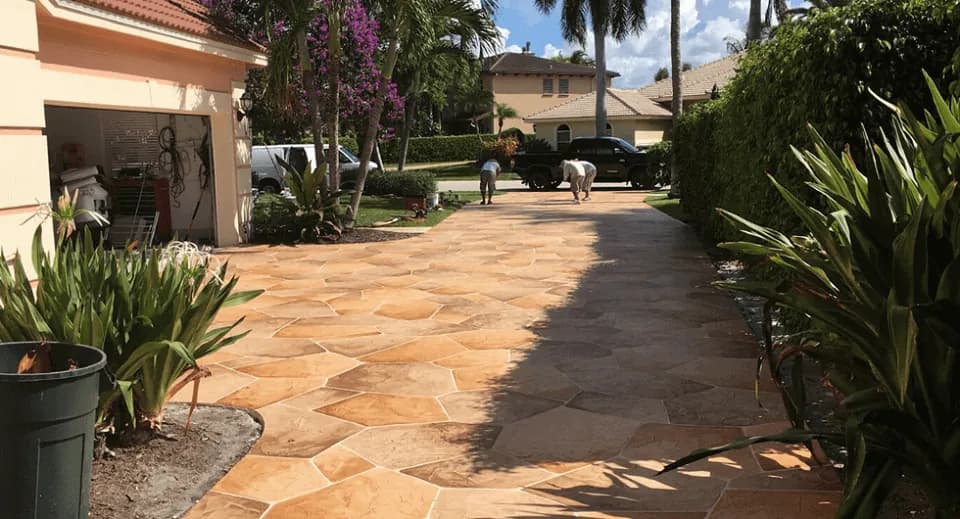
- Topcoat sealers (acrylic, polyurethane, epoxy) — form a surface film with gloss or satin finish; better stain resistance at the surface; can peel if moisture is trapped or application is improper; ideal for decorative concrete, pool decks, and stamped surfaces
- For hurricane prep: penetrating sealer for plain structural concrete; UV-resistant topcoat over decorative surfaces to protect both appearance and structure
What to Do After a Hurricane
After a storm, inspect concrete before pressure washing. Look for new cracks, vertical displacement between slabs, debris embedded in the surface, and water pooling that wasn't there before. Wait at least 72 hours after any flooding before applying new sealer—moisture must escape the slab first.
- Inspect for new cracks or settling — vertical displacement means structural movement
- Remove loose debris before pressure washing to avoid grinding it into the surface
- Use pH-neutral cleaner for stain removal; avoid bleach, which degrades sealer
- Wait 72+ hours after flooding before applying any new sealer
- Assess sealer condition — if water no longer beads on the surface, reseal before next season