Cost Comparison: Concrete vs. Pavers in Palm Beach County
Upfront cost is usually the first question. Here’s how the two compare for typical Palm Beach County residential projects in 2026:
- Plain concrete: $6–$9 per sq ft installed
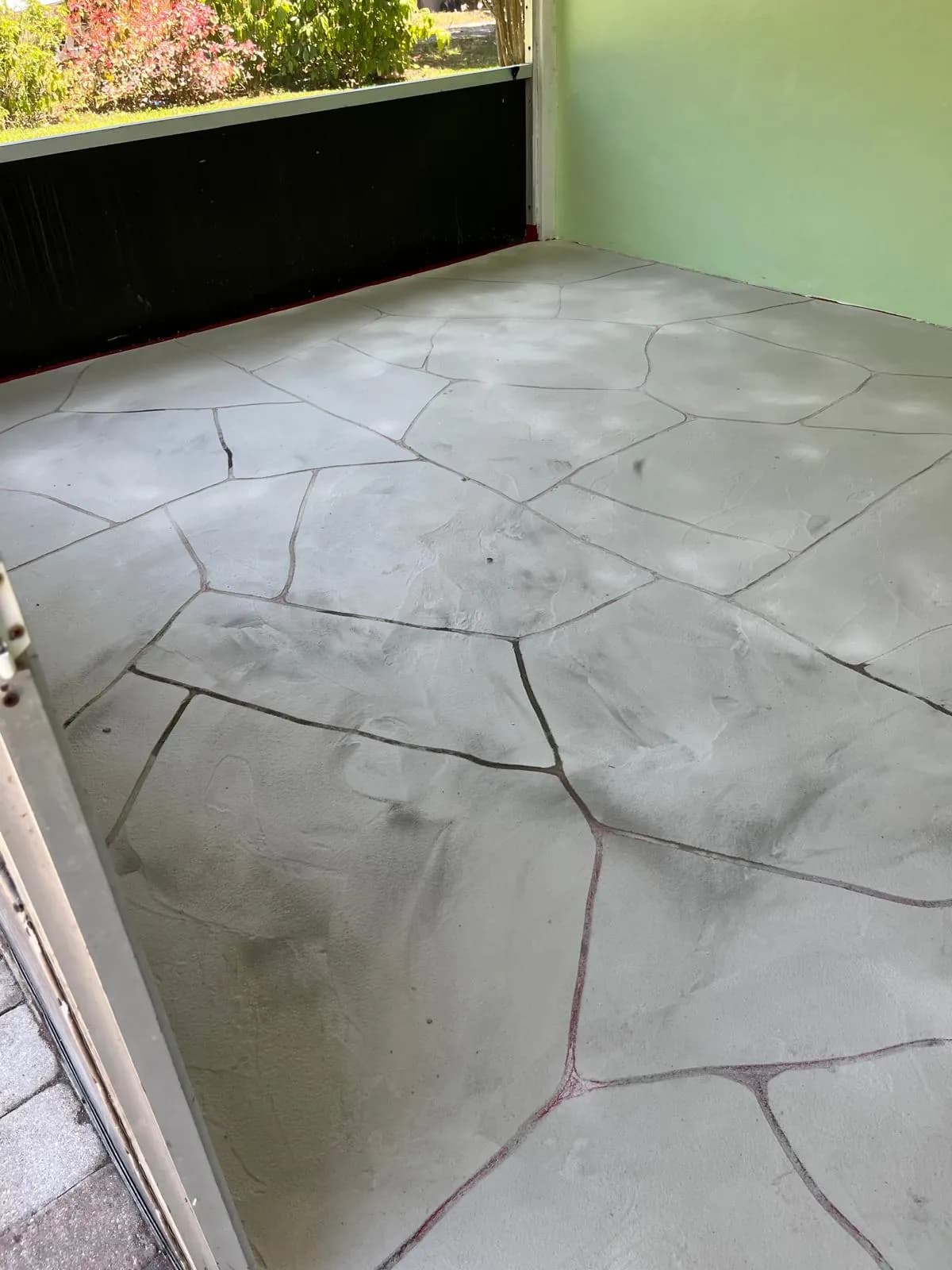
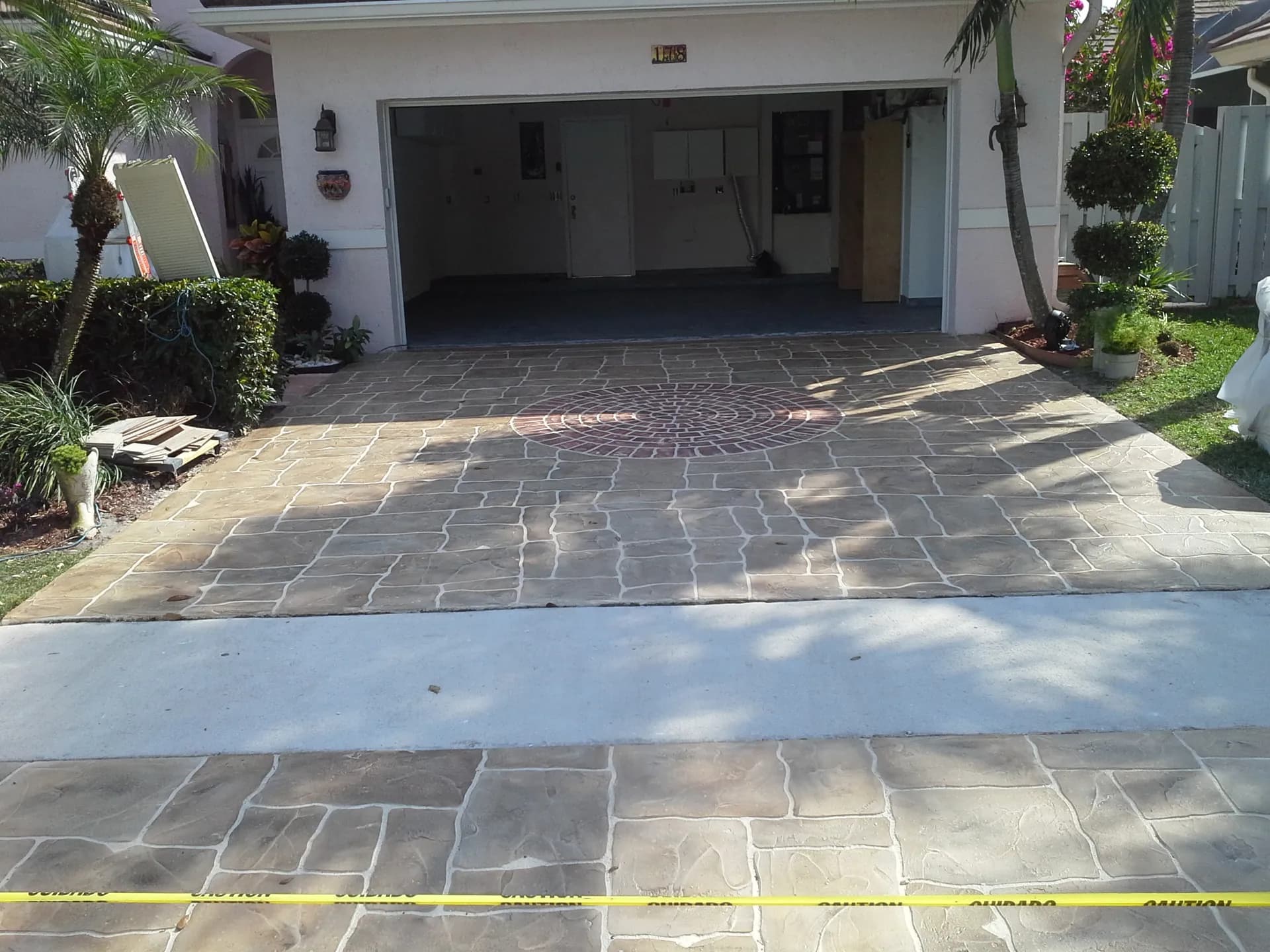
- Stamped or decorative concrete: $10–$18 per sq ft installed
- Concrete pavers: $12–$20 per sq ft installed
- Brick pavers: $15–$25 per sq ft installed
- Natural stone pavers: $20–$50+ per sq ft installed
- For a 600 sq ft driveway: stamped concrete = $6,000–$10,800 vs. concrete pavers = $7,200–$12,000
Durability in South Florida’s Climate
South Florida’s UV intensity, heavy rain, sandy soil, and tree root pressure test every outdoor surface. Here’s how concrete and pavers compare under those conditions:
- Concrete — monolithic slab won’t shift or grow weeds; handles rain as a continuous surface; susceptible to surface cracking in large sections without proper control joints; lifespan 25–30 years
- Pavers — individual pieces absorb movement in sandy soils but can shift, settle unevenly, and create trip hazards; root intrusion pushes sections up; lifespan 20–25 years before releveling is needed
- South Florida risk for pavers: sandy soil plus heavy rain erodes the compacted base faster than northern climates, causing settling and weed intrusion within 5–7 years without ongoing maintenance
10-Year Maintenance: What You’ll Actually Spend
Maintenance costs differ substantially between the two options over time. Here’s a realistic 10-year estimate for a 600 sq ft driveway in Palm Beach County:
- Concrete: annual pressure wash + reseal every 2–3 years at $1–$2.50 per sq ft — total 10-year maintenance roughly $600–$1,500
- Pavers: weed removal, polymeric sand reapplication every 2–3 years, releveling of shifted sections — total 10-year maintenance roughly $1,500–$4,000+
- Pavers’ advantage: individual pieces can be swapped if one chips or cracks without disturbing surrounding areas
- Concrete’s advantage: resurfacing an aging slab costs $8–$14 per sq ft and resets the clock without demolition
HOA Acceptance in Palm Beach County Communities
Most HOA communities in Palm Beach County accept both concrete and pavers, but some older communities—particularly in Boca Raton and Delray Beach—specify one material in their CC&Rs. Stamped concrete that mimics brick or stone patterns is widely accepted as a paver alternative by architectural review committees throughout the county. We prepare HOA documentation for both material types, including color samples, pattern boards, and material specs.
Which Do Most Palm Beach County Homeowners Choose?
Based on 15+ years of projects across Palm Beach County, here’s the pattern we consistently see by application type:
- Driveways — majority choose stamped concrete for new installations; homeowners replacing deteriorating pavers often switch to stamped concrete to reduce ongoing maintenance
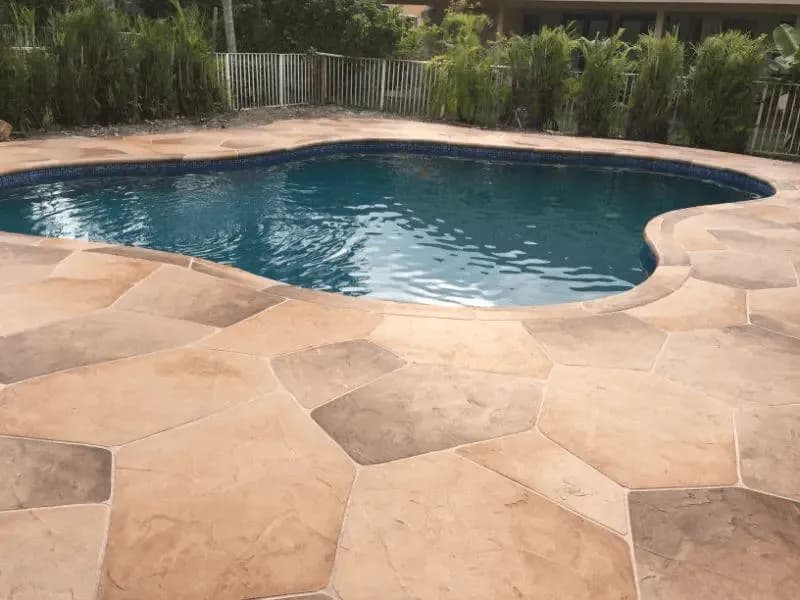
- Pool decks — concrete resurfacing overlay dominates because the seamless surface has no joints for water infiltration and stays cooler with light-colored finishes
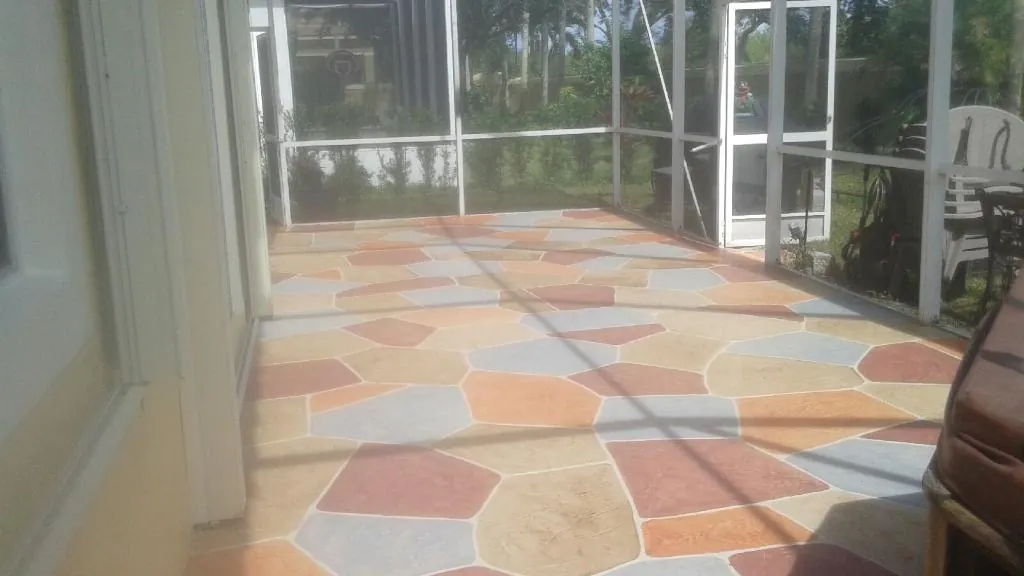
- Patios — pavers popular in high-end new construction; concrete overlay or stamped concrete popular for renovations and HOA communities requiring faster turnaround
- Walkways — pavers preferred for narrow garden paths; concrete for wide continuous areas
The Bottom Line: Which Should You Choose?
Choose concrete if you want lower long-term cost, minimal maintenance, and a seamless surface. Stamped concrete replicates virtually any paver pattern at 30–40% less total 10-year cost. Choose pavers if you prefer the traditional modular aesthetic, want the option to replace individual pieces, or live in a community that specifically requires pavers. We install both and can provide written quotes for both options during the same free estimate—so you can compare directly before deciding.