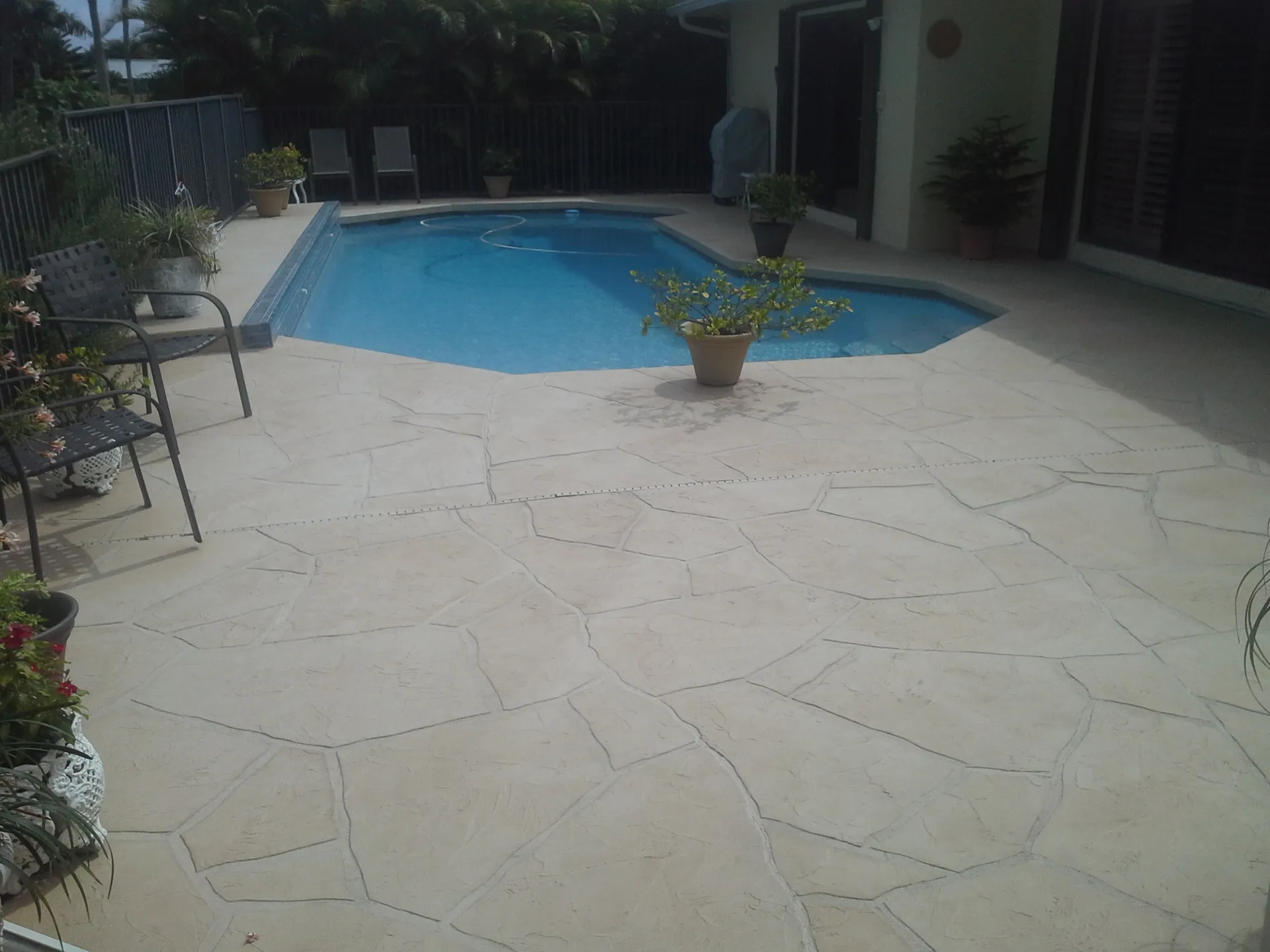
The Three Options and When Each Makes Sense
The right decision depends on the type and extent of damage, not just appearances. A cracked driveway doesn’t automatically mean replacement—and a worn pool deck might be $8,000 away from looking brand new. Here’s the framework:
- Repair — surface-only or localized damage: hairline cracks, small chips, isolated settling
- Resurfacing — structurally sound slab that is uniformly worn, stained, faded, or slippery
- Replacement — structural failure: heaving, full-depth cracking, root intrusion, drainage problems caused by settling
When Concrete Repair Is the Right Call
Repair is appropriate when damage is limited to the surface layer or a small isolated area. In South Florida, the most common repair candidates are:
- Hairline surface cracks less than ¼ inch wide with no vertical displacement
- Small chips or spalled sections from UV exposure or pressure washing
- Isolated settling in one section while the rest of the slab is stable
- Control joint deterioration (crumbling at seams between slabs)
- Surface staining or efflorescence that hasn’t penetrated deeply
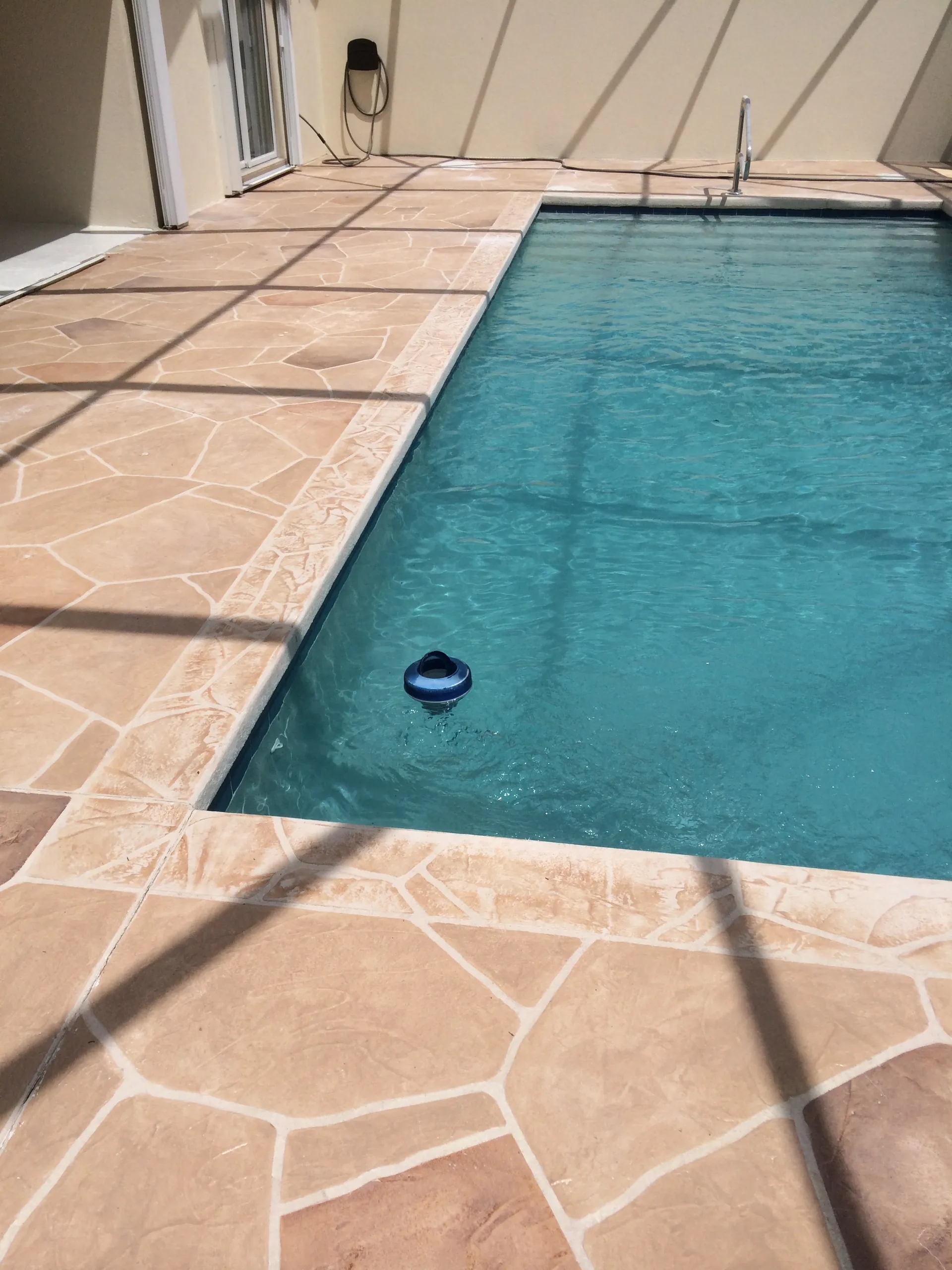
When Resurfacing Makes Sense
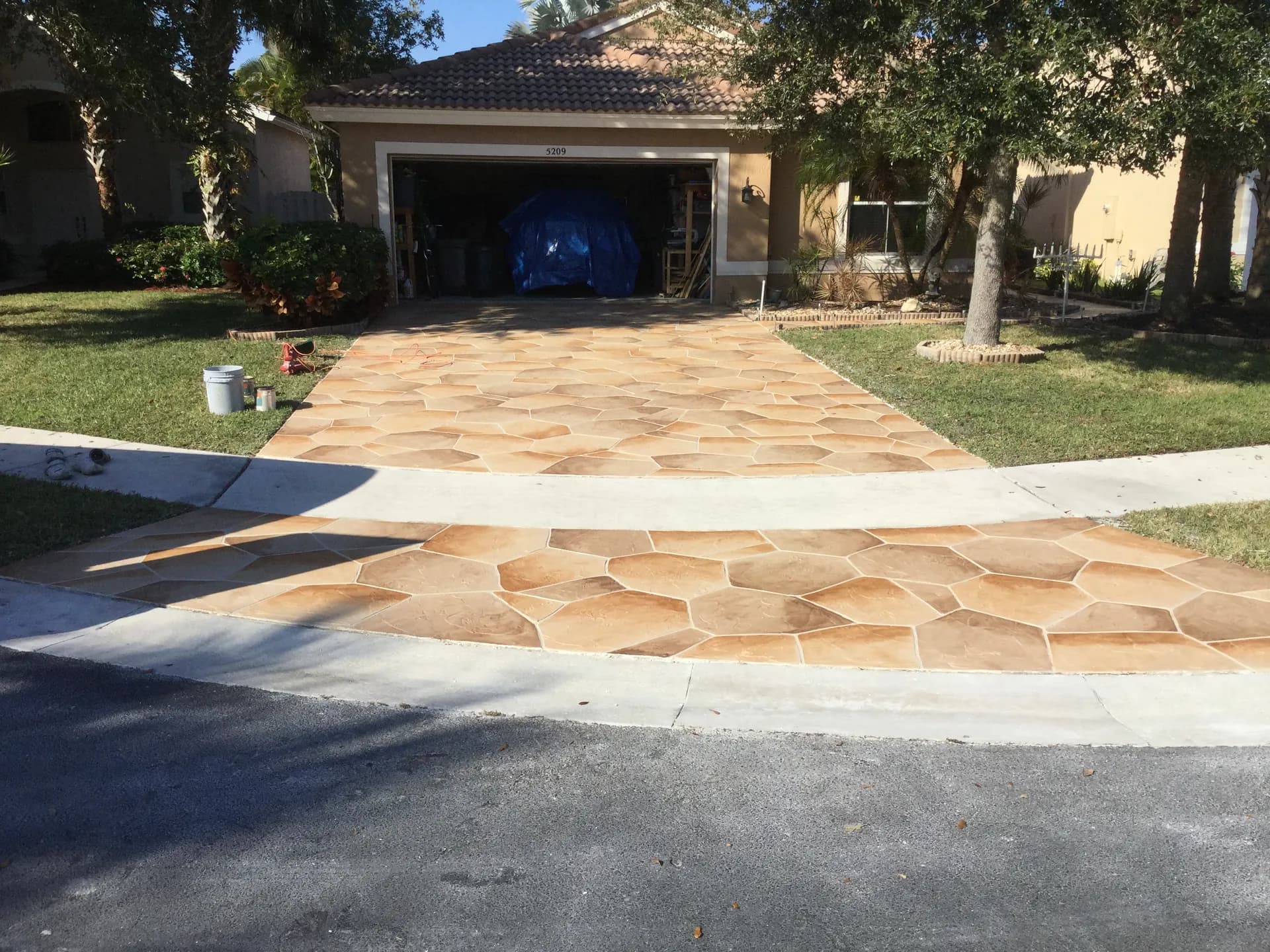
Resurfacing is the most cost-effective option when concrete is structurally solid but aging in appearance. A decorative overlay bonds directly to the existing slab—no demolition, no removal costs. Resurfacing is the right call when:
- Both sides of any crack are at the same height (no vertical displacement)
- The surface is uniformly worn, faded, or stained but firm underfoot
- You want to add color, pattern, or texture to an otherwise plain slab
- The pool deck is safe but slippery or uncomfortably hot on bare feet
- You’re preparing to sell and want updated curb appeal at a fraction of replacement cost
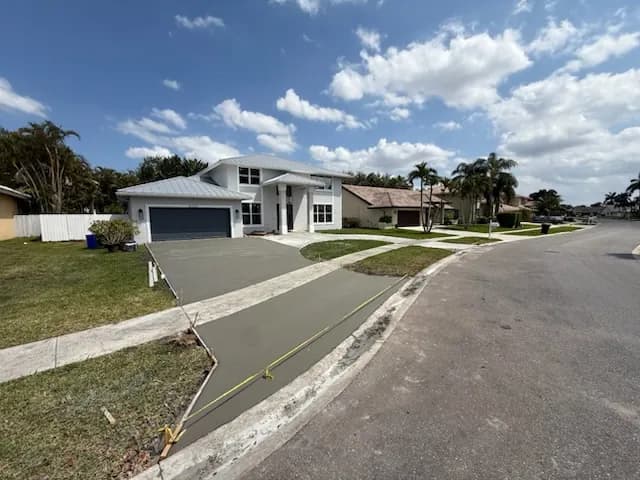
When Full Replacement Is Necessary
Replacement is unavoidable when the structural integrity of the slab is compromised. No overlay or surface repair will hold over ongoing structural movement. Replace when you see:
- Vertical displacement between slabs—one side of a crack is noticeably higher than the other
- Tree root intrusion that has pushed sections up or cracked the full slab thickness
- Widespread settling that redirects drainage toward your house or pool equipment
- Slab heaving from soil movement—common in sandy South Florida soils near large trees
- More than 25–30% of the surface area showing active structural damage
Cost Comparison: Repair vs. Resurface vs. Replace
Here’s how the three options compare on cost for a typical 600 sq ft driveway in Palm Beach County:
- Crack repair (spot work): $200–$800 for isolated sections
- Full resurfacing with decorative overlay: $4,800–$8,400 ($8–$14 per sq ft)
- Full concrete replacement (plain finish): $3,600–$5,400 ($6–$9 per sq ft)
- Demolition and removal of existing slab: add $1,200–$2,400 to replacement cost
- Key takeaway: resurfacing eliminates demolition costs entirely, making it cost-competitive with a plain replacement while delivering a far better finished appearance
South Florida Factors That Affect the Decision
Palm Beach County’s climate and soil conditions accelerate concrete deterioration differently than in northern climates. These regional factors shift the repair-vs-replace calculus:
- Sandy soil — Poor long-term compaction under slabs creates voids and settling faster than clay-heavy soils
- Tree roots — Royal palms, ficus, and oak root systems are aggressive; root heaving usually means replacement, not repair
- UV intensity — Sealers degrade in 2–3 years; unsealed concrete spalls faster than in temperate climates
- Heavy rain — Poor drainage around a slab creates subsurface erosion; resurfacing won’t solve a drainage problem
- Salt air — Coastal properties within a mile of the ocean see faster surface spalling; resurfacing cycles are shorter