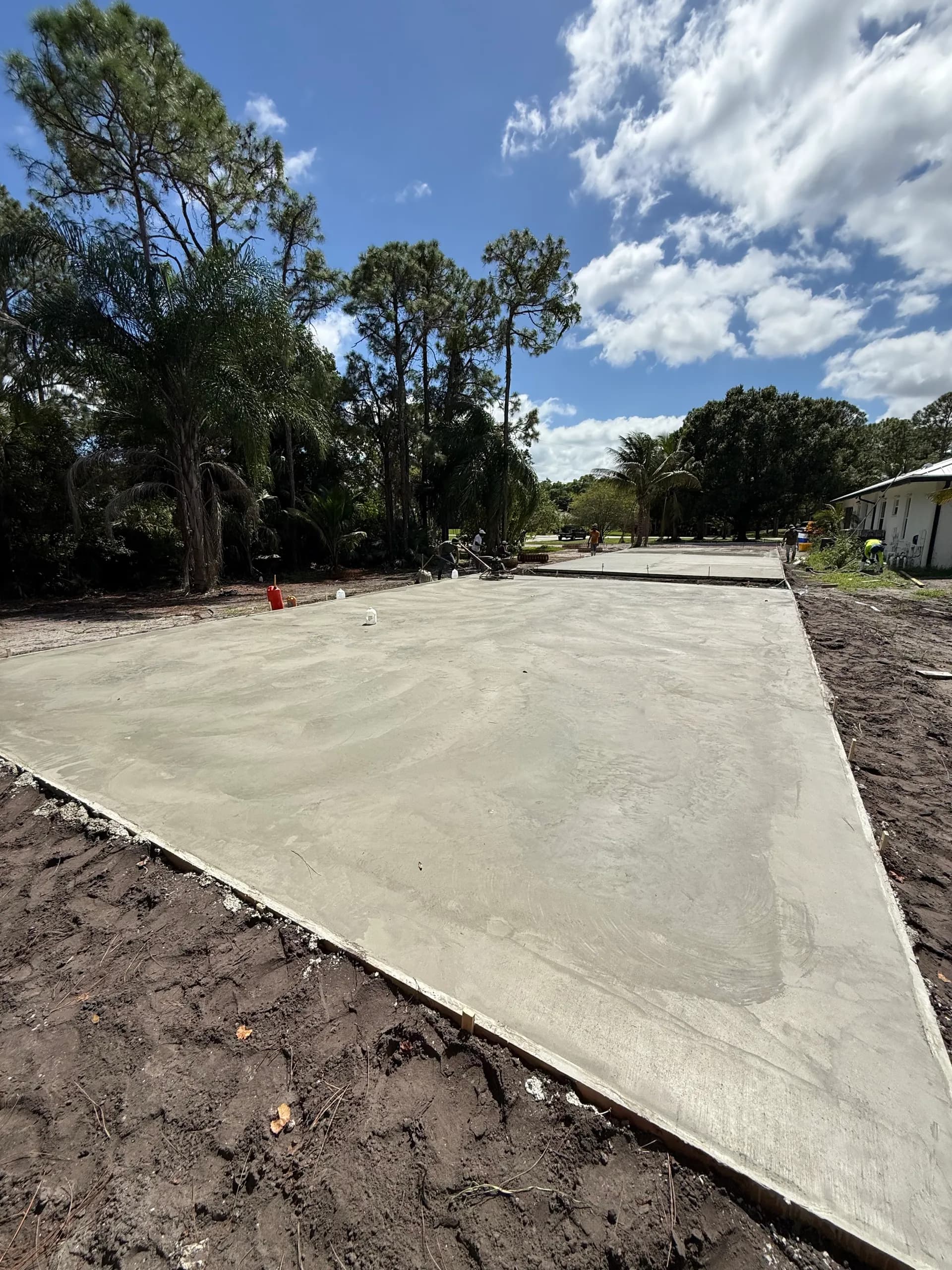
Why Curing Is Different in South Florida
Concrete doesn't harden by drying—it hardens through a chemical reaction (hydration) between water and cement. That reaction needs moisture to continue. In South Florida's intense heat, surface moisture evaporates far faster than in northern climates, starving the reaction before it completes. The result: surface cracking, reduced long-term strength, and a brittle surface layer that spalls and erodes prematurely. Contractors who don't adjust for this produce concrete that fails faster than its rated lifespan.
What Happens to Concrete in Extreme Heat
When air temperature exceeds 90°F and surface temperature exceeds 120°F—common on South Florida concrete in summer—several problems accelerate simultaneously:
- Rapid moisture evaporation — surface dries faster than hydration can use the water, causing plastic shrinkage cracks within the first few hours
- Accelerated initial set — concrete hardens too quickly, reducing workability and making proper finishing difficult
- Reduced compressive strength — high-temperature curing consistently produces weaker concrete than the same mix cured at 70°F
- Thermal gradient cracking — the slab interior stays cooler than the surface, creating differential stress that produces internal cracks
- On-site water addition — a common crew shortcut when concrete is stiffening too fast; adding water severely weakens the final product and is a warning sign of inexperienced or unlicensed work
What Licensed South Florida Contractors Do Differently
Experienced contractors in Palm Beach County use a set of practices specifically adapted to the local climate. These aren't optional—they're the difference between concrete that lasts 25 years and concrete that starts cracking in 5:
- Early morning pours — start between 6–8 AM when temperatures are lowest and direct sun hasn't reached the pour area
- Chilled water or ice — use cold mixing water to lower fresh concrete temperature; some contractors add ice to reduce heat gain during transit from the batch plant
- Lower slump with admixtures — use a mix with lower water-to-cement ratio and chemical admixtures (plasticizers) to maintain workability without excess water
- Evaporation retarder — spray a monomolecular film over fresh concrete immediately after placing to slow surface moisture loss before finishing
- Curing compound — apply immediately after finishing to form a membrane that retains moisture during the critical hydration window
- Wet curing — for large or decorative pours, cover with wet burlap and polyethylene sheeting for 3–7 days
- Schedule around afternoon storms — South Florida's summer thunderstorms can wash out fresh concrete; pours are timed to cure before afternoon rain arrives
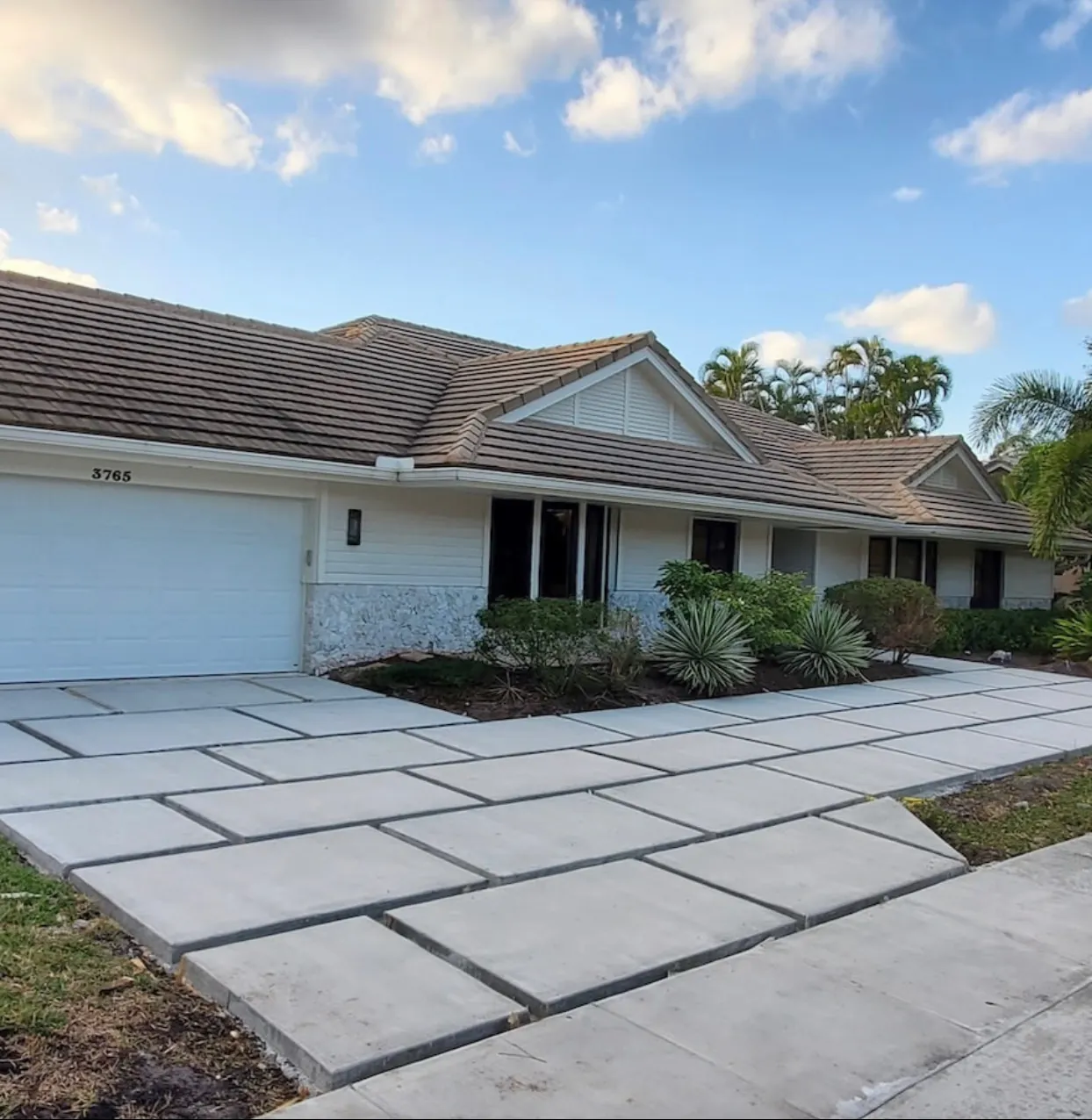
The 28-Day Rule: What 'Cured' Actually Means
Concrete reaches roughly 70% of its design strength in 7 days and essentially full strength at 28 days—regardless of climate. In South Florida's heat, the surface may feel hard within 24 hours, but the slab has not achieved structural strength. Safe use timeline for a new concrete slab in South Florida:
- 24 hours: foot traffic only; keep all vehicles off
- 72 hours: passenger vehicles OK; avoid hard braking or sharp turns
- 7 days: heavy vehicles; full decorative overlay application
- 28 days: full rated compressive strength; full structural loading
- 2–3 years: first reseal recommended — UV degrades sealer faster in South Florida than in northern climates
Decorative and Stamped Concrete Curing in South Florida
Stamped and decorative concrete pours require additional care in South Florida's heat because the stamp pattern must be applied within a precise plasticity window. Too hot and the concrete sets before stamping is complete. Experienced South Florida decorative contractors time their crews carefully, work in coordinated sections, and may use retarding admixtures to extend the working window on large decorative pours. This is one reason to verify that a decorative concrete contractor has specific South Florida experience—techniques that work in northern climates don't translate directly to August in Palm Beach County.